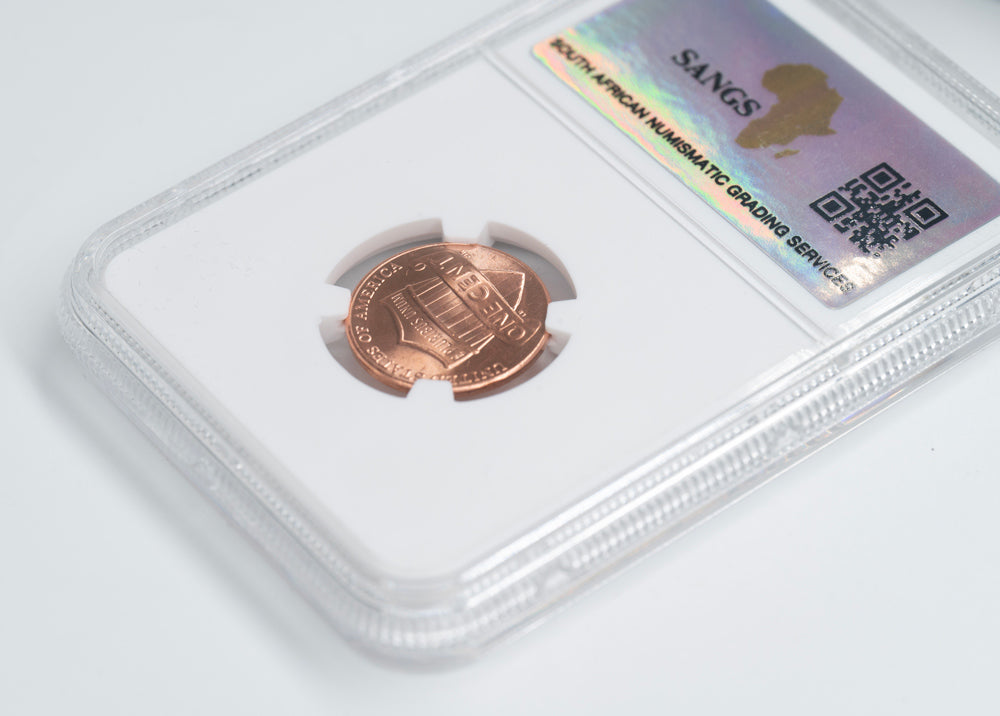

For more than two centuries, the American penny was everywhere and, for the most part, barely noticed.
It passed through railway stations, corner shops and school cafeterias. It gathered in kitchen drawers, coat pockets and glass jars. It was saved, spent, dropped, overlooked and occasionally handed over with the vague instruction to “keep the change”.
Then, in 2025, its story changed.
After 232 years, the United States Mint ended production of the circulating one-cent coin. The decision was driven largely by economics: by then, it cost considerably more than one cent to manufacture each penny. Even the smallest denomination, it seems, had become financially unsustainable.
The 2025 Last Penny marks this closing chapter in American monetary history. These final-year examples were struck at the Denver Mint and carry the distinctive “D” mintmark, linking them to one of the United States’ most important coin-producing facilities.

They feature Abraham Lincoln on the obverse and the Union Shield on the reverse. Lincoln first appeared on the cent in 1909, becoming the first US president portrayed on a regularly issued American coin. The shield, introduced in 2010, represents the union he fought to preserve.
For collectors, however, the appeal of the Last Penny lies not only in its design, but in its timing.

Coins issued at the beginning or end of an era often attract particular interest. They become historical punctuation marks: the first, the last, the year everything changed. The 2025-D penny captures precisely that moment — when one of the world’s most familiar pieces of small change ceased to be produced for everyday circulation.
The penny has also gathered a surprisingly eccentric collection of stories over its long life.
Most pennies never travelled much further than a till, a trouser pocket or the bottom of a handbag. One, however, made it to Mars.
NASA attached a 1909 Lincoln cent to the Curiosity rover as part of a camera-calibration target. Scientists often place a recognisable object beside rocks to provide a sense of scale. Apparently, even on another planet, the humble penny remained useful.
Another became famous because a teenager examined his lunch money.
In 1947, 16-year-old Don Lutes Jr. received a 1943 bronze cent in change at his school cafeteria. Pennies produced that year were meant to be made from zinc-coated steel because copper was required for the Second World War effort. A small number were mistakenly struck in bronze.
Lutes kept the coin for more than 70 years. It was later sold for $204,000 — a useful reminder to examine one’s change before dismissing it as merely inconvenient.
Stories such as these explain why collectors are often interested in coins far beyond their printed value. A coin may begin as an ordinary means of payment, but time can give it a different significance. Its appeal may lie in a minting error, an unusual journey, a historic event or simply the fact that it was among the last of its kind.

The Last Penny is not an ancient rarity or buried treasure. Its importance is more immediate. It represents the retirement of an object that had been part of daily American life since 1793.
During that time, the penny survived wars, economic upheaval and the arrival of credit cards, online banking and contactless payments. In the end, it was not a dramatic political event that brought its circulating life to a close, but changing habits and the inconvenient realities of cost.
For South African collectors, the appeal is not dependent on nostalgia for American small change. It lies in owning a tangible record of transition — the moment an everyday object moved quietly from circulation into history.
The penny may have had very little spending power left.
As a piece of history, however, it has become considerably more interesting.