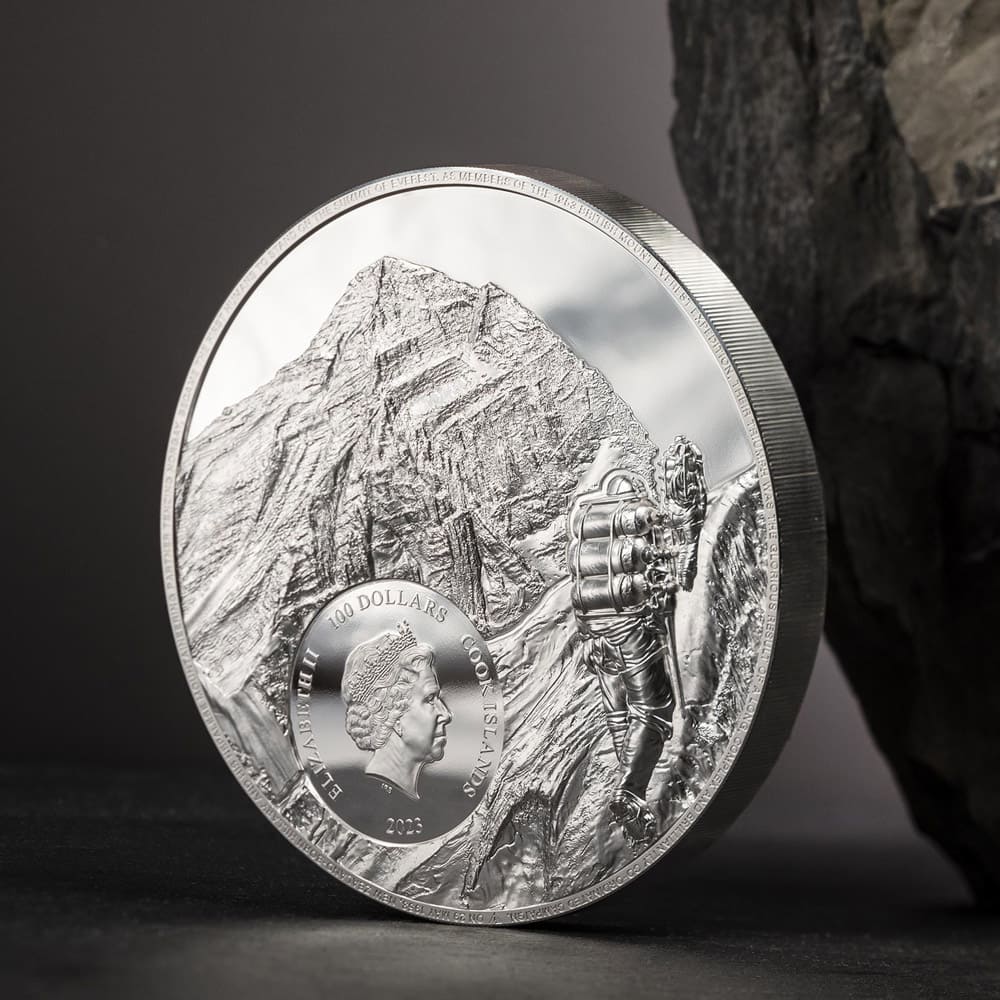

There was a time when a one-ounce coin felt substantial. Today, it’s almost modest. In recent years, mints around the world have been quietly escalating the scale of silver coinage—pushing beyond 1kg, 5kg, even 10kg pieces. What was once a novelty has become a distinct category: the “extreme” silver coin.
This isn’t a gimmick. It’s a shift.
A brief timeline of scale
The modern bullion era, which gathered pace in the late 20th century, was built on accessibility—1oz coins that could be widely traded, stored, and gifted. As demand grew, so did formats: 10oz bars, then 1kg coins. By the early 2000s, kilogram coins had become a recognised format, particularly among collectors seeking something more substantial without losing practicality.
The real inflection point came in the 2010s. Mints began experimenting with oversized pieces—5kg and 10kg coins, often struck in limited numbers and featuring increasingly ambitious designs. Some pushed even further, producing statement coins weighing 1 tonne or more, designed as centrepieces rather than circulating collectables.
What changed was not just the weight, but the intent.
Why go bigger?
Part of the answer lies in storytelling. A larger canvas allows for more intricate engraving, higher relief, and deeper narrative detail. Wildlife scenes gain texture. Historical moments can be rendered with nuance. In many cases, these coins blur the line between numismatics and sculpture.
There is also a shift in how collectors engage with physical assets. In a digital-first world, scale carries a certain reassurance. A 10kg silver coin is not just seen—it is experienced. Its weight, presence, and craftsmanship are immediate in a way that smaller formats cannot replicate.
Mints have responded by positioning these coins as statement pieces: not merely units of silver, but objects of significance.
The craft behind the mass
Producing a coin at this scale introduces technical challenges. Striking a 10kg piece requires precision engineering—dies must withstand immense pressure, and achieving consistent detail across such a large surface is no small feat. Many of these coins are struck in ultra-high relief, demanding multiple strikes and meticulous finishing. The result is often closer to a work of art than a traditional coin. Frosted elements, mirror-like fields, and layered textures all contribute to a sense of depth that smaller coins can only hint at.

A niche, but a growing one
Extreme-weight silver coins remain a niche within a niche. They are not designed for everyday trade or casual collecting. Yet their presence is growing, and with it, a quiet redefinition of what a coin can be.
For South African audiences—long familiar with the global influence of the Krugerrand—this evolution is worth noting. It reflects a broader trend: coins are no longer confined to standardised formats. They are becoming more expressive, more experimental, and, in some cases, more ambitious than ever before.
More than metal
It’s easy to focus on the numbers—kilograms, mintages, dimensions. But that misses the point.
These oversized coins are not simply about scale. They are about intention. They represent a desire to create objects that endure, that command attention, and that carry meaning beyond their material.
In a world that increasingly favours the intangible, there is something quietly compelling about that.