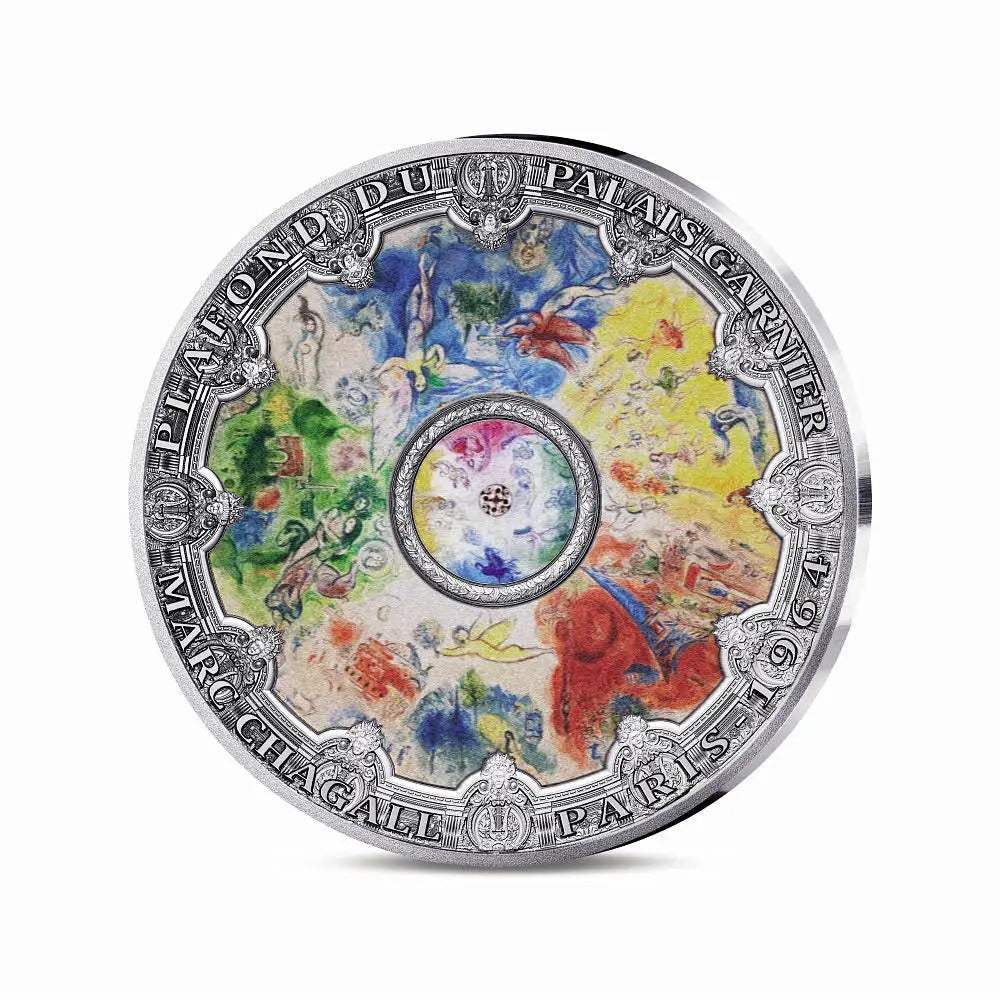

Image source: Monnaie de Paris

Founded in 864 AD, Monnaie de Paris has survived kings, emperors and republics—and today remains one of the most artistic forces in modern coin design.
Before France had the Eiffel Tower, before the Louvre became a global museum, and long before the euro entered everyday life, Monnaie de Paris was already making money.
Founded in 864 AD under the reign of King Charles II, known as Charles the Bald, the Paris Mint is widely recognised as the oldest continuously operating mint in the world. For more than 1,100 years, it has played a central role in French monetary history, producing coins through the reigns of kings, emperors, republics and modern governments.
Yet despite its extraordinary age, Monnaie de Paris is not defined by nostalgia. Its story is not only about survival, but reinvention. Today, it remains one of the most artistically ambitious institutions in modern numismatics, known for coins that combine history, design, craftsmanship and cultural storytelling.
A Mint with an Artist’s Eye
Unlike mints primarily associated with bullion production or large-scale circulating coinage, Monnaie de Paris has developed a distinctive identity built around creativity and craft.
Its collector coins frequently explore themes from French heritage, world history, art, architecture, science and contemporary culture. Each release is designed not simply as a piece of currency, but as a carefully considered object that captures a moment, a person or an idea.
This is what gives the Paris Mint its particular character. Its coins are often small in scale, but rich in narrative. They invite closer inspection, rewarding the eye with layers of engraving, symbolism and detail that may not be immediately visible at first glance.

Where Tradition Meets Experimentation
The artistic strength of Monnaie de Paris is deeply connected to its long history as both a manufacturer and a guardian of French craftsmanship.
Over the centuries, the institution has brought together engravers, designers, sculptors and artisans, preserving techniques refined over generations while also embracing modern technology. The result is a style that often combines classical elegance with contemporary experimentation.
From beautifully detailed €2 commemorative coins to limited-edition gold and silver collector pieces, Monnaie de Paris releases frequently demonstrate remarkable attention to detail. Fine engraving, innovative shapes, unusual finishes and complex relief work are used not simply for decoration, but to enhance the story being told.
In this sense, the coin becomes more than an object. It becomes a small-scale canvas—one where history, artistry and craftsmanship meet.

More Than Money
A defining feature of Monnaie de Paris is its willingness to push the boundaries of what a coin can be.
While respecting the traditions of medallic art, the mint has embraced modern themes and unconventional approaches. Some releases incorporate contemporary design elements, experimental techniques or collaborations with artists and cultural institutions. This willingness to explore new ideas has helped it remain relevant in an increasingly competitive global collector market.
For collectors, this creates a unique appeal. A Monnaie de Paris coin is often valued not only for its precious metal content or rarity, but also for the narrative behind it. Whether commemorating a historic anniversary, celebrating a cultural icon or highlighting a global issue, each piece is intended to communicate something.
That is the quiet power of a well-made coin. It can hold a portrait, a place, a memory, a national symbol or a cultural milestone in the palm of a hand.
A Home on the Seine
 The mint’s historic headquarters, the Hôtel de la Monnaie, sits on the banks of the River Seine in Paris. The building has housed the mint since the 18th century and remains a powerful symbol of France’s long relationship with coin production, craftsmanship and artistic excellence.
Today, the site is more than a working institution. It is also a cultural destination, hosting exhibitions and giving visitors a closer look at the skills behind the creation of coins and medals.
That setting matters. It reinforces the sense that Monnaie de Paris is not merely producing objects, but preserving and renewing a living craft.
Small Objects, Grand Stories
In a world where many aspects of production have become increasingly standardised, Monnaie de Paris continues to stand apart.

Its work demonstrates that coins can be more than instruments of exchange or collectable objects. They can be expressions of national identity, artistic vision and human creativity.
More than a millennium after its founding, the Paris Mint continues to prove that even the smallest pieces of metal can carry remarkable stories.