
History likes a pattern.
One monarch. One crown. One face on the coin.
Neat. Orderly. Predictable.
And then—1689 happened.
Instead of the usual handover of power, Britain did something wildly inconvenient for tradition: it crowned two monarchs. William III and Mary II. A joint monarchy. A shared throne.
Naturally, the coinage had to keep up.
For the first (and only) time, a British coin carried two rulers. Two profiles. No clear “main character”.
It was subtle rebellion—struck in gold.
And nowhere is that disruption more striking than in the five guinea piece.
This wasn’t everyday pocket change. It was big, bold, and unapologetically showy—the kind of coin that didn’t circulate so much as arrive. A power move, in currency form.
But like most rule-breaking moments, it didn’t last.
Mary died. The system snapped back to normal. One monarch. One face. Order restored.
Except for the coins.
They stayed exactly as they were—slightly awkward, historically loaded, and now incredibly rare.
Which brings us to now.
That same spirit of disruption has just played out in real time.
An ultra-rare William and Mary five guinea coin — one of the most visually and historically unusual pieces in the entire guinea series — has just sold at auction at Roseberys London.

On 18 March, the coin achieved £11,808, finding its way into the hands of a UK collector.
Interest was strong—unsurprising, given what the piece represents.
As Catrin Jones, Head of Jewellery & Specialist at Roseberys, noted:
“This rare coin is a relic of the only time in history when a husband and wife ruled together as equal monarchs. The result reflects its immense rarity and historical importance.”
Because collectors don’t just chase gold. They chase moments. The oddities. The exceptions. The times history didn’t quite follow its own rules.
This coin ticks every box.
Unusual. Short-lived. Instantly recognisable. And just a little bit rebellious.
Not bad for something that was supposed to represent stability.
As Rael Demby, CEO of the South African Gold Coin Exchange & The Scoin Shop, puts it:
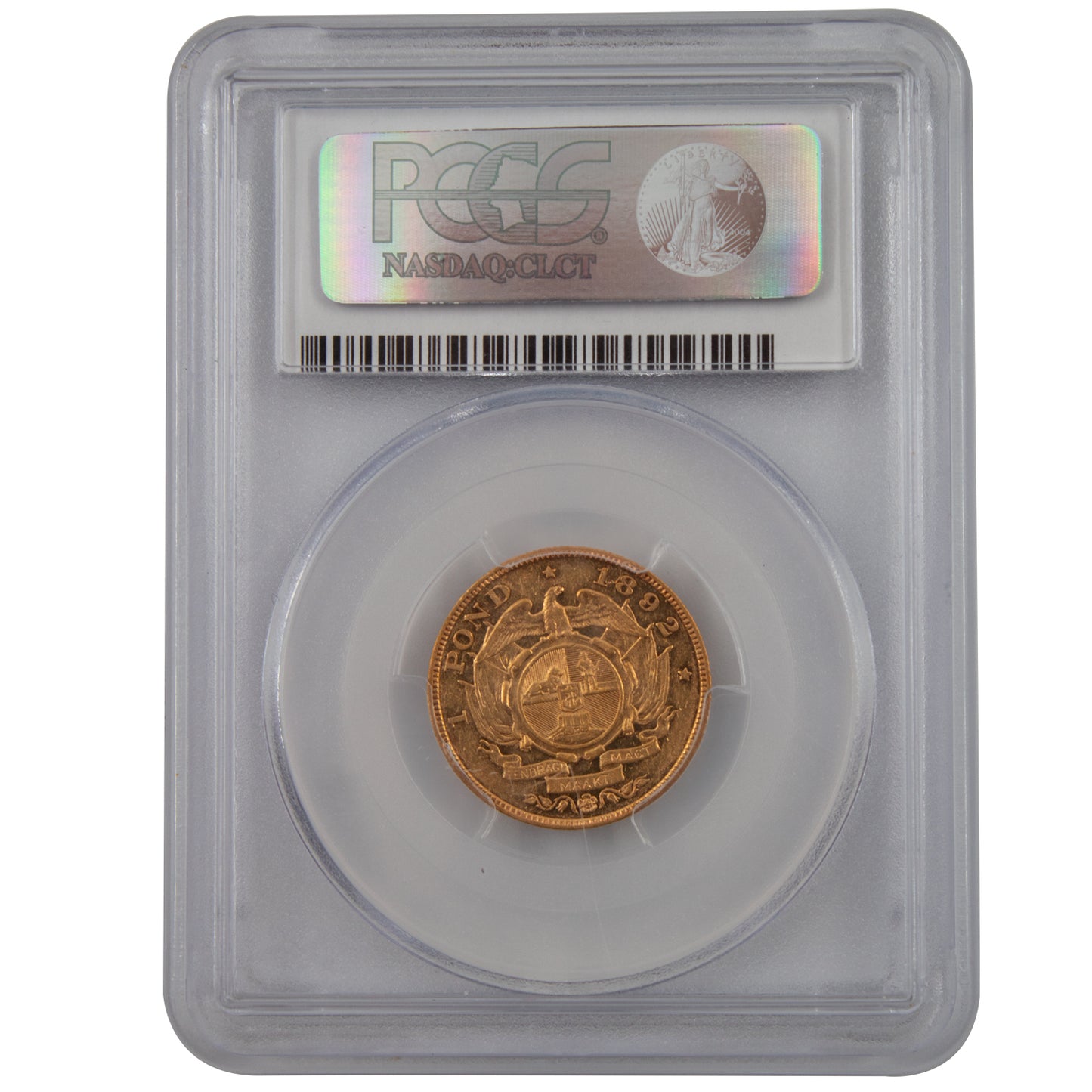
“In numismatics, it’s often the anomalies that matter most. Coins like the William and Mary five guinea piece—or South Africa’s own ZAR ‘Double Shaft’, where a die error created a distinctive doubling in the design—capture those rare moments where something wasn’t quite as it should be. And that’s exactly what makes them so desirable.”
From Britain’s only joint monarchy to one of South Africa’s most intriguing minting anomalies, the pattern holds.
Opportunities to own disruption, struck in gold, don’t come around often—and when they do, they don’t last.